
Music and the arts are viewed as something that encapsulates every person and every country, but it can be affected by culture, status and social class. Without access to the arts certain people can be left without its benefits, they allow people to express physical feelings and emotion through image or sound (Eisner, 2002).

Although the arts and music are everywhere, people from different educational backgrounds may have an altering opinion on the arts, as explained by Nick Rankin and Robin Redmond, arts integration is a process in public schools which allows both teacher and artist to connect a subject matter into an art project, or in a music class using art to understand how reading music works (Rabkin, Redmond, 2006). This teaches the children valuable lessons about creating and exploring their imaginations and inquisitive nature around the art of things. Schools with lower budgets may opt for simple low-cost arts, such as painting and drawing which requires less expensive equipment. Artists and teachers in Chicago dynamically improve their curriculum by combining comparable processes in an art form or activity with a more traditionally academic activity, for example, they may pair writing with sketching or reading literature with looking at art (Burnaford, Aprill & Weiss, 2001). The combined subjects engage the same cognitive processes, setting these corresponding processes in momentum to generate a cognitive between the two subjects, deepening learning in both. This kind of work promotes higher levels of engagement, raises students’ intrinsic standards, and motivates students to invest the energy that learning requires of them (Newmann, 2000).

These activities are advertised and so forth based on social class and culture. Those with an in depth understanding with music can fully appreciate its context and content, whereas those who perhaps use music as a passive activity will not fully understand or appreciate it for what it is (Huang, 2019). Becoming accustomed to certain music or songs that certain classes or social backgrounds listen to or immerse themselves in can also deprecate the connections with music, such as classical music being associated with upper classes, and football chants with working class (Bruenger, 2016).
Since, and over, the 20th century the music industry has become a multimillion-pound industry, based on the means to monetise at every stage of the process, and each part of the industry investigates each sociological and economic class to determine how to make the most money (The Berkman Centre for Internet & Society at Harvard University, 2011). Whereas one person may be able to afford a three-figure sum for a live concert experience, one person may only be able to afford a compact disc worth an average of £10, and now streaming services offer free models of their subscription with the inclusion of advertisements for those who may not be able to afford a £9.99 monthly subscription. These things are taken into consideration by the industry, to capitalise as much as possible even within different economic circumstances (Webster, 2019).
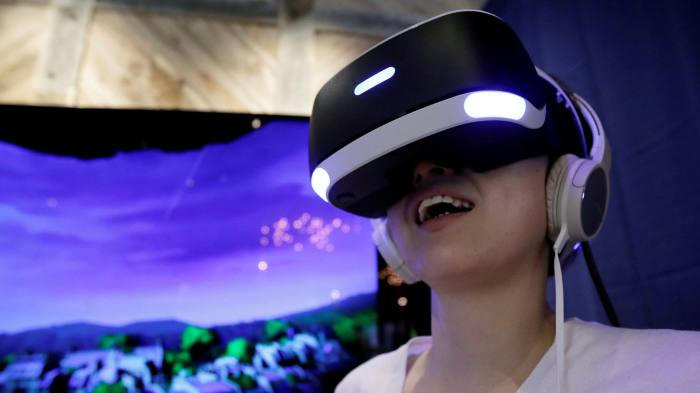
Sony music are looking to, starting in 2021 with ‘Sony Immersive Music Studios’, work on and experiment with the ideas of immersive media using a games engine associated with popular video game Fortnite, as in 2019 musician Marshmello performed a live set to Fortnite players which attracted a virtual audience of 1,000,000 people – with the creation of exclusive merchandise after around $50 (Ingham, 2019). The idea behind the immersive media is that Sony could re-create a music venue experience live event from the comfort of your own home or wherever you are residing, but with large elements of fantasy throughout. This means that some things that would not normally happen during a physical live event can happen in the digital one (Stassen, 2020). Sony looks to use technology to broaden the experience of a live event and take it further without losing intimacy. They hope that the immersive media will expand artist’s creative outreach and capabilities, whilst also expanding creative options associated with design for live music events (Sony Music, 2021).
This could well be the future of live music, with the effects of a global pandemic looming and causing long-term effects. Musicians are a huge part of culture and revenue for their countries, and have not been supported appropriately throughout the pandemic, losing valuable income and risking their business, they have had to find alternate strategies alone (Seetharaman, 2020). The long-term effects of leaving the EU will also cause disruption for live music, with many artists saying they may be unable to afford to travel to other countries to perform (Dray, 2021). The immersive media engine would make it affordable and more possible for people to attend, as they would have a one-time purchase of a headset which are becoming cheaper than ever, and additional costs of the live event, emitting travel and accommodation expenses normally associated with live music, and enabling a connection between real world and virtual (Loureiro, 2020). This could help the social class divide between those usually unable to afford to experience live music and those who regularly attend. By simply putting on a VR headset, you can be transported to a live event of your choice, performed wherever in the world (echoAR, 2020).
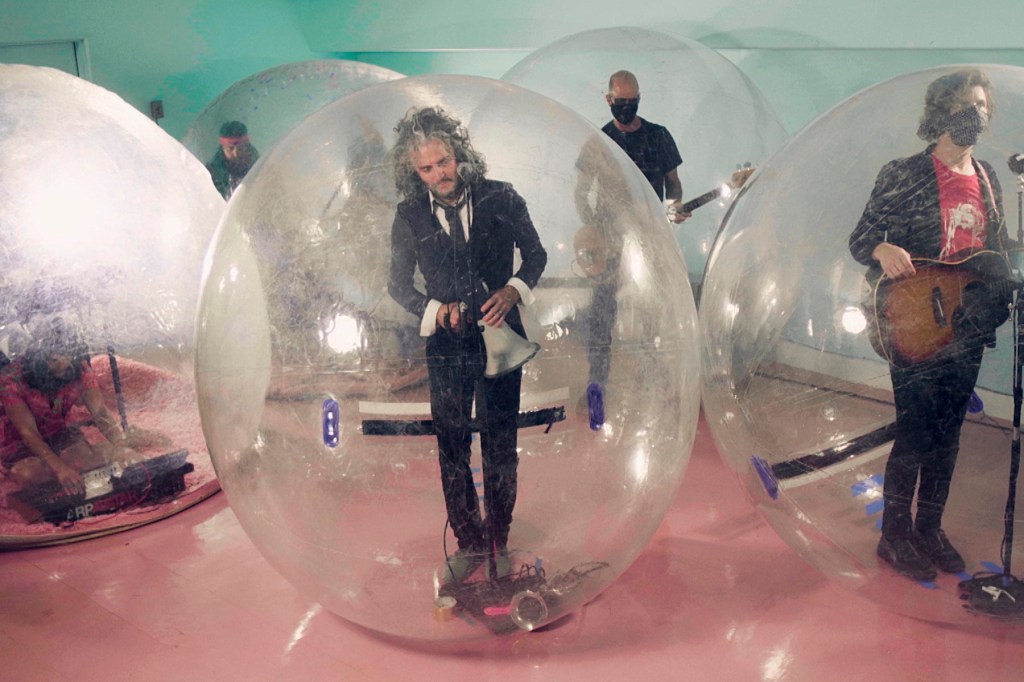
Band the Flaming Lips recently set up a physical concert amid the COVID-19 global pandemic, but the audience members had access to a ‘bubble’ (Savage, 2021). Each bubble held 3 persons each and had enough oxygen for 3 people for up to 80 minutes – although towels were needed inside for condensation. Inside each ‘bubble’ was a high frequency speaker to help prevent sound from being muffled – as well as a water bottle, a fan, a towel, and, if it got too hot, the bubble was refilled with cool air using a leaf blower. Fans who needed the bathroom were accompanied by venue staff once they had put on a medical face mask and stepped outside of their ‘bubble’ (Roberts, 2021). It looks unlikely to be any G.G. Allin, who would cocktail drugs and perform on-stage naked and fight with the spectators, type concerts anytime soon (Mock, 2016).
References
Bloomberg, (2016), Sony has sold more than 5m units of its PlayStation VR since it was launched in 2016 © Bloomberg, Accessed 10/03/2021
Bohle, T, (n.d.), Photo by Tembela Bohle on Pexels.com, Accessed 10/03/2021
Bruenger, D, (2016), Making Money, Making Music: History and Core Concepts, University of California Press, pp 1 – 6, Accessed 09/03/2021
Burnaford, G, Aprill, A, Weiss, C, (2001), Renaissance in the classroom: Arts integration and meaningful learning. Mahwah, NJ: Erlbaum, Accessed 03/03/2021
Dray, S, (2021), Impact of Brexit on UK musicians performing in the EU, Accessed 25/02/2021, https://lordslibrary.parliament.uk/impact-of-brexit-on-uk-musicians-performing-in-the-eu/
echoAR, (2020), How Virtual Reality is Changing the Music Industry, Accessed 10/03/2021, https://medium.com/echoar/how-virtual-reality-is-changing-the-music-industry-9b874ee166ab
Eisner, E. (2002). Teaching the Visual Arts, In the Arts and the Creation of Mind (pp. 46-69), New Haven; London: Yale University Press. Accessed 03/03/2021, http://www.jstor.org/stable/j.ctt1np7vz.7
Eisner, E. (2002). The Role of The Arts in Transforming Consciousness, In the Arts and the Creation of Mind (pp. 1-24), New Haven; London: Yale University Press. Accessed 03/03/2021, http://www.jstor.org/stable/j.ctt1np7vz.5
Huang, X, (2019), Understanding Bourdieu Cultural Capital and Habitus, School of Art & Design, Guangzhou College of Commerce, Guangzhou, Guangdong, pp 47, Accessed 29/01/2021, https://doi.org/resv11n3p45
Ingham, T, (2019), Marshmello Just Played a Live Set to 10m People in Video Game Fortnite – and That Wasn’t Even The Most Interesting Move He Made This Weekend, Accessed 10/03/2021, https://www.musicbusinessworldwide.com/marshmello-just-played-a-live-set-to-10m-people-in-video-game-fortnite-and-that-wasnt-even-the-most-interesting-move-he-made-this-weekend/
Loureiro, S.M.C. ed., (2020), Managerial Challenges and Social Impacts of Virtual and Augmented Reality, IGI Global. pp 21, Accessed 10/03/2021
Mock, R, (2016), Performing the Toxic Body, The Arts Institute, pp 2 – 4, Accessed 10/03/2021, http://blogs.plymouth.ac.uk/artsinstitute/2016/05/06/feature-performing-the-toxic-body/
NBC, (2020), The Tonight Show Starring Jimmy Fallon, Episode 1315A, Musical guest The Flaming Lips performs on September 11, 2020, NBCU Photo Bank via Getty Images, NBCUniversal Media, LLC, Accessed 10/03/2021
Newmann, F. M, (2000), Authentic intellectual work: What and why?, Research/Practice, 8(1), Accessed 03/03/2021, www.education.umn.edu/CAREI/Reports/Rpractice/Fall2000
Petrović, N, (2020), Augmented and Virtual Reality Web Applications for Music Stage Performance, 2020 55th International Scientific Conference on Information, Communication and Energy Systems and Technologies (ICEST), Niš, Serbia, pp. 33-36, doi: 10.1109/ICEST49890.2020.9232713.
Rabkin, N, Redmond, R, (2006) The Arts Make a Difference, The Journal of Arts Management, Law, and Society, 36:1, 25-32, DOI: 10.3200/JAML.36.1.25-32
Roberts, M.S., (2021), Band stages unique ‘space bubble’ concert to get COVID-creative, Accessed 16/02/2021, https://www.classicfm.com/music-news/coronavirus/flaming-lips-band-space-bubble-concert/
Savage, R, (2021), Flaming Lips stage unique ‘space bubble’ concert in Oklahoma, Accessed 16/02/2021, https://www.bbc.co.uk/news/entertainment-arts-55794674
Seetharaman, P, (2020), Business models shifts: Impact of Covid-19, Indian Institute of Management Calcutta, Diamond Harbour Road, Joka, Kolkata, India, pp 2, Accessed 25/02/2021.
Sony Music (2021), Madison Beer Creates Ultra-Realistic Immersive Reality Concert Experience with Sony Music Entertainment and Verizon, Accessed 10/03/2021, https://www.sonymusic.com/sonymusic-labels/madison-beer-immersive-reality-concert-experience-sony-music-entertainment-and-verizon/
Stassen, M, (2020), Sony is Building a Team ‘Dedicated to Reimagining Music Through Immersive Media’ – Using Fortnite Maker Epic Games’ Unreal Engine, Accessed 10/03/2021, https://www.musicbusinessworldwide.com/sony-is-building-a-team-dedicated-to-reimagining-music-through-immersive-media-using-fortnite-maker-epic-games-unreal-engine/
StockSnap, (n.d.), Child playing piano with adult, Image by StockSnap from Pixabay, Accessed 02/03/2021
The Berkman Centre for Internet & Society at Harvard University, (2011), Rethinking Music: A Framing Paper, pp 89 – 100, Accessed 09/03/2021 Webster, J, (2019), Taste in the platform age: music streaming services and new forms of class distinction, Information, Communication & Society 2020, Vol. 23, No. 13, pp 1909 – 1924, Accessed 10/03/2021





 Thoughts of a designer